

What if one person’s trash could become another’s treasure—without breaking the law? This question lies at the heart of a growing debate in the Lone Star State. While salvaging discarded items isn’t outright banned under Texas statutes, the rules are far from straightforward.
Items left in public spaces often fall under the “public domain” principle, meaning ownership rights may dissolve once trash reaches the curb. However, local ordinances and property boundaries dramatically shape what’s permissible. Locked containers or posted “No Trespassing” signs instantly transform a harmless act into a potential legal risk.
Timing also matters. Courts may evaluate when materials were discarded to determine if they’re truly abandoned. A business tossing expired goods yesterday versus last week could lead to different interpretations. Municipal health codes and trespassing penalties further complicate matters, with fines or even misdemeanor charges possible in some areas.
Table of Contents
Key Takeaways
- Public domain rules generally allow access to discarded items on non-private property.
- Trespassing laws apply if dumpsters are locked or marked with warnings.
- Local health and safety codes may override broader legal permissions.
- Ownership disputes often hinge on intent and timing of disposal.
- Penalties can range from fines to jail time depending on jurisdiction.
Understanding Dumpster Diving: Trends and Terminology
Once seen as a last resort for survival, salvaging discarded goods has transformed into a cultural movement. This shift reflects changing attitudes toward consumption and environmental responsibility. Below, we break down its evolution and modern appeal.
From Necessity to Subculture
The practice of retrieving usable materials from commercial or residential waste began during economic crises. Homeless populations and low-income families often relied on this method to access food, clothing, and household items. Over time, it evolved beyond basic needs.
Activists and eco-conscious groups adopted the strategy to combat overproduction. The term “freeganism” emerged, combining “free” and “veganism” to describe those rejecting consumerism. Urban explorers later popularized it as a form of rebellion against waste culture.
The Social Media Effect
Platforms like TikTok and YouTube turned niche activity into viral content. Creators showcase hauls of unopened electronics, furniture, and edible groceries from retail stores. These videos often highlight shocking statistics about food waste.
| Era | Primary Motivation | Key Influences |
|---|---|---|
| 1980s-2000s | Economic hardship | Recession cycles |
| 2010s-Present | Environmental activism | Social media trends |
Modern participants often cite reducing landfill contributions as their main goal. Others view it as a challenge to corporate waste policies. Regardless of intent, the trend continues reshaping how society perceives value in discarded resources.
Dumpster Diving Laws in Texas: An Overview
Navigating salvage rights requires understanding overlapping legal frameworks. Federal guidelines and state statutes sometimes clash, creating a complex landscape for those exploring discarded resources.
Federal vs. State Regulations
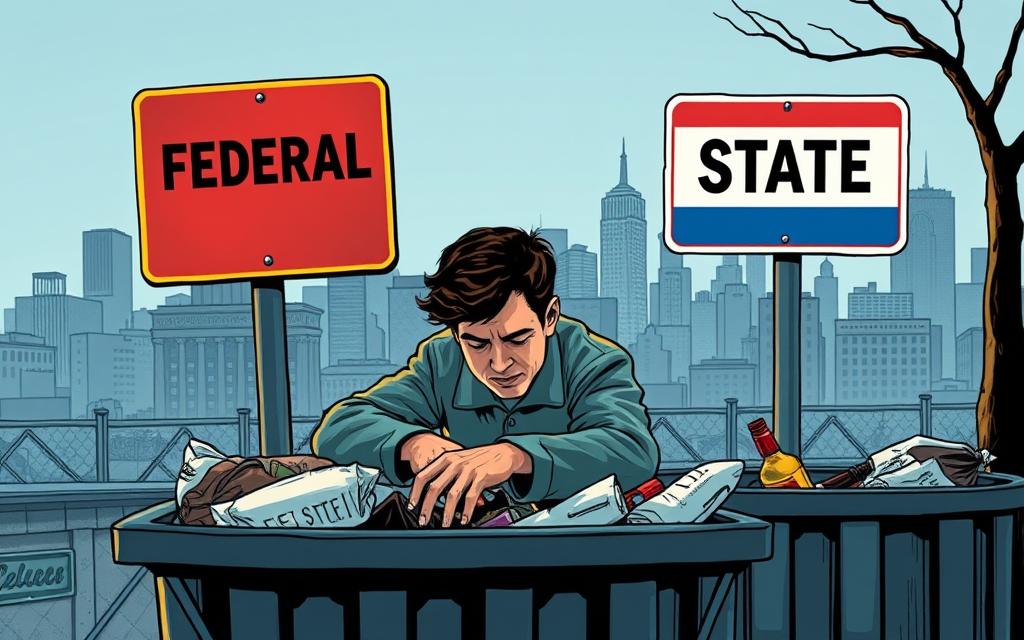
Under federal law, discarded materials lose Fourth Amendment protection once placed in public trash areas. A 1988 Supreme Court ruling cemented this “public domain” principle, allowing access unless restricted by other statutes.
Texas follows this baseline but adds layers through property rights enforcement. While no statewide ban exists, municipalities can impose stricter rules. Trespassing charges apply if containers sit on private land or display warnings.
| Federal Guidelines | Texas Approach | Local Variations |
|---|---|---|
| Public domain applies | Follows federal baseline | City-specific bans possible |
| No theft claims for trash | Theft laws apply to locked containers | Dallas prohibits scavenging |
| Free access unless restricted | Emphasizes property boundaries | Houston bans commercial site access |
Three cities demonstrate this patchwork system:
- Austin: Permits access to unlocked public bins
- Dallas: Bans scavenging from municipal collection points
- Houston: Prohibits removal from business dumpsters
Always verify local ordinances before engaging. What’s allowed in one county might carry fines in another.
is dumpster diving illegal in texas
Where you find discarded items in Texas often determines their legal status. Public spaces like parks or sidewalks generally permit access to unattended materials. Containers on commercial lots or residential yards operate under different rules.
Public vs. Private: Where Access Changes
Materials in municipal areas typically fall under public domain. This means unlocked bins near curbs or in alleys might be fair game. Three key differences define these spaces:
- Ownership: City-maintained vs. business/residential
- Visibility: Street-facing vs. behind fences
- Security: Open lids vs. locked mechanisms
Obtaining permission becomes critical when containers sit on leased or owned land. A retail store’s rear loading dock isn’t equivalent to a public sidewalk bin.
Local Rules Create Uncertainty
Municipal ordinances frequently override general assumptions. Houston prohibits removing items from business containers, while Dallas bans scavenging at city collection points. These local laws create pockets of restriction:
| City | Public Property Rules | Private Land Access |
|---|---|---|
| Austin | Allowed if unlocked | Forbidden without consent |
| San Antonio | Daytime access only | Posted warnings enforced |
Ignoring signs or barriers often leads to trespassing citations. Courts frequently side with property owners when disputes arise over boundary lines.
Always verify municipal codes before acting. A container’s location—not its contents—usually dictates what’s permissible under Texas property frameworks.
Legal Consequences and Penalties
Crossing property lines while salvaging items carries hidden risks that could escalate quickly. While some view discarded materials as free for the taking, local statutes often draw sharp boundaries between lawful retrieval and punishable offenses.
Trespassing and Disorderly Conduct
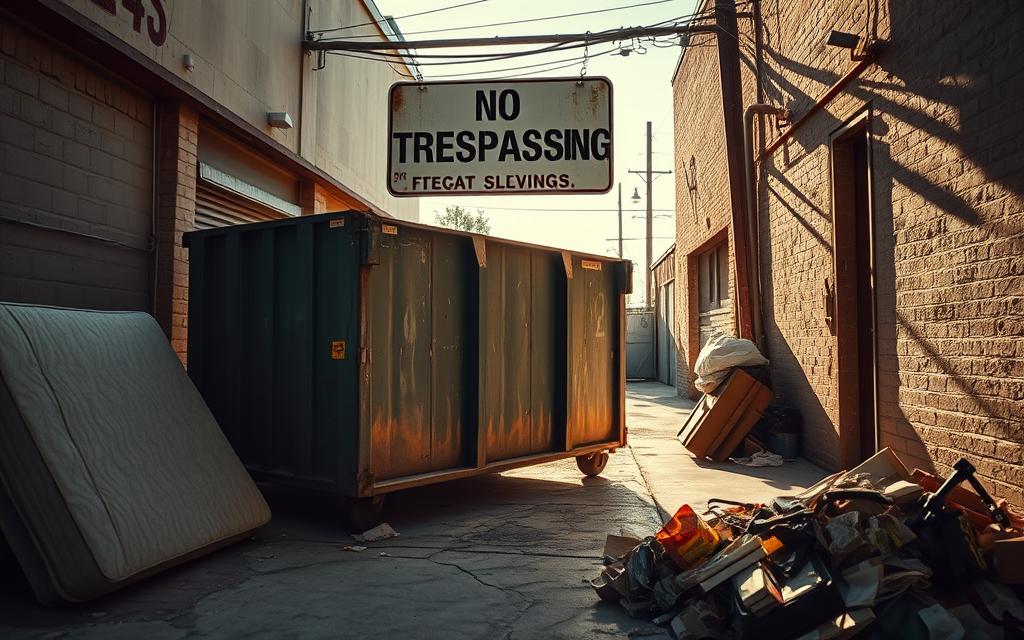
Ignoring “No Trespassing” signs near commercial bins frequently leads to citations. Property owners can request police intervention even if containers appear abandoned. First-time offenders might receive $200 fines, while repeat violations could escalate to Class B misdemeanors.
Theft claims emerge when materials remain inside locked enclosures or guarded areas. A retail chain’s sealed waste compactor differs legally from an open apartment complex bin. Removing items from secured zones might trigger charges under penal code 31.03 if intent proves malicious.
| Violation Type | Potential Penalty | Common Scenarios |
|---|---|---|
| Trespassing | $50-$500 fines | Climbing fences after hours |
| Disorderly conduct | Community service | Creating public disturbances |
| Theft accusations | Misdemeanor charges | Removing items from locked units |
Municipal codes add complexity. Houston penalizes disruptive behavior near waste facilities, while San Antonio enforces time restrictions. Always check regional rules before acting—what’s overlooked today might appear on court documents tomorrow.
Navigating Private Property and Local Ordinances
Property boundaries often dictate legal access to discarded materials in Texas. Understanding local laws and physical barriers helps avoid conflicts with property owners or law enforcement.
Interpreting “No Trespassing” Signs
Posted warnings serve as legal red flags. Visible signs near bins or fences invalidate “I didn’t know” defenses. Courts treat these markers as clear boundaries—crossing them often results in misdemeanor charges.
Locks on containers signal restricted access. Even unlocked gates require explicit permission if behind commercial buildings. Always check local ordinances for:
| Scenario | Legal Outcome | Preventive Action |
|---|---|---|
| Visible “No Trespassing” sign | Immediate citation | Photograph area for signage |
| Locked enclosure | Theft accusations | Seek written consent |
| Verbal warning from owner | Disorderly conduct charge | Leave immediately |
Three steps ensure compliance:
- Research municipal codes using city websites
- Document container locations and security features
- Request written approval from owners
Never assume public access applies to alleys or parking lots. A quick check local regulations could mean the difference between salvage success and courtroom appearances.
Safety, Liability, and Best Practices
Salvaging discarded resources involves more than legal awareness—it demands proactive safety measures and ethical responsibility. Balancing opportunity with risk management protects both individuals and property owners.

Health and Safety Risks
Retrieving items from trash exposes divers to unpredictable hazards. Common dangers include:
- Spoiled food: Expired groceries may carry bacteria like salmonella
- Broken glass or sharp metal in unsecured waste
- Chemical leaks from paint cans or cleaning supplies
Wearing gloves and closed-toe shoes reduces injury risks. Avoid touching face or food until hands are thoroughly washed.
Tips for Responsible Dumpster Diving
Adopting these strategies minimizes liability and maintains positive community relations:
- Document finds with timestamps if retrieving high-value materials
- Notify business employees about unclaimed goods to avoid theft claims
- Use grabbers or hooks to sift through dumpsters safely
Business owners often face insurance complications if divers get injured on-site. Clear communication and responsible salvage practices prevent disputes.
| Best Practice | Benefit |
|---|---|
| Carry first-aid kits | Address minor injuries immediately |
| Research local store waste schedules | Reduce time spent at bins |
Always leave areas cleaner than you found them. This builds trust with stores and neighborhoods while protecting your legal standing.
Conclusion
Navigating the complexities of salvaging discarded materials requires balancing opportunity with awareness. While federal public domain rules allow access to trash in municipal areas, Texas emphasizes property boundaries and local laws. Always verify city-specific ordinances before retrieving items, as regulations shift between cities like Austin and Houston.
Health risks and trespassing penalties demand caution. Sharp objects or expired food pose dangers, while ignoring rules on private land risks fines. Responsible practices—like wearing gloves and avoiding locked containers—protect both divers and business owners.
Stay informed through municipal websites and community updates. Respecting posted signs and maintaining cleanliness fosters positive relationships. By prioritizing safety and legality, salvagers contribute to sustainable resource use without crossing ethical lines.