

Imagine finding perfectly usable items in a bin behind a store. While this practice gains traction as an eco-friendly way to reduce waste, scavenging through discarded materials walks a fine line between resourcefulness and risk. Many assume abandoned items become public property, but location and intent often determine legality.
Federal guidelines generally allow retrieving trash left in public areas. However, once containers sit on private property, rules change dramatically. Trespassing charges can apply even if no “No Trespassing” signs exist. Businesses sometimes treat their bins as extensions of their premises, creating potential conflicts.
Local regulations add another layer of complexity. Some cities enforce ordinances against rummaging through commercial waste, while others focus on safety concerns like broken glass or hazardous materials. Understanding these nuances helps avoid unintended violations.
Table of Contents
Key Takeaways
- Legality often depends on container location (public vs. private land)
- Trespassing laws apply even without visible warnings near bins
- Municipal codes may override general state-level permissions
- Commercial properties frequently enforce stricter rules than residential areas
- Safety hazards in waste containers could lead to secondary violations
Introduction to Dumpster Diving in Texas
Rummaging through commercial bins, known as dumpster diving, has shifted from a last-resort act to a celebrated eco-conscious practice. What began decades ago as a necessity during economic hardships now thrives as both a sustainability effort and a money-saving strategy. Urban explorers and environmentalists alike embrace this method to divert usable goods from landfills.
Dumpster Diving: An Evolving Trend
Retailers often discard unexpired food, intact furniture, or sealed cosmetics due to minor packaging flaws. These finds fuel a growing community sharing tips through social media, turning waste reduction into a collective mission. Many participants report saving hundreds monthly while reducing their environmental footprint.
Location boundaries dramatically affect this activity. Bins on public property typically offer more access freedom than those on private property, where permission becomes essential. Some municipalities enforce strict ordinances against removing discarded items, citing sanitation or business protection concerns.
Texas’s mix of sprawling cities and rural areas creates unique challenges. Major metro regions like Houston see higher enforcement of container access rules, while smaller towns may prioritize waste management differently. This patchwork of approaches underscores why understanding local context matters before exploring discarded treasures.
Exploring “is dumpster diving legal in texas” and Local Regulations
Navigating scavenging rules requires understanding layered legal frameworks. State statutes set broad boundaries, while municipal codes add specific restrictions that vary across communities.
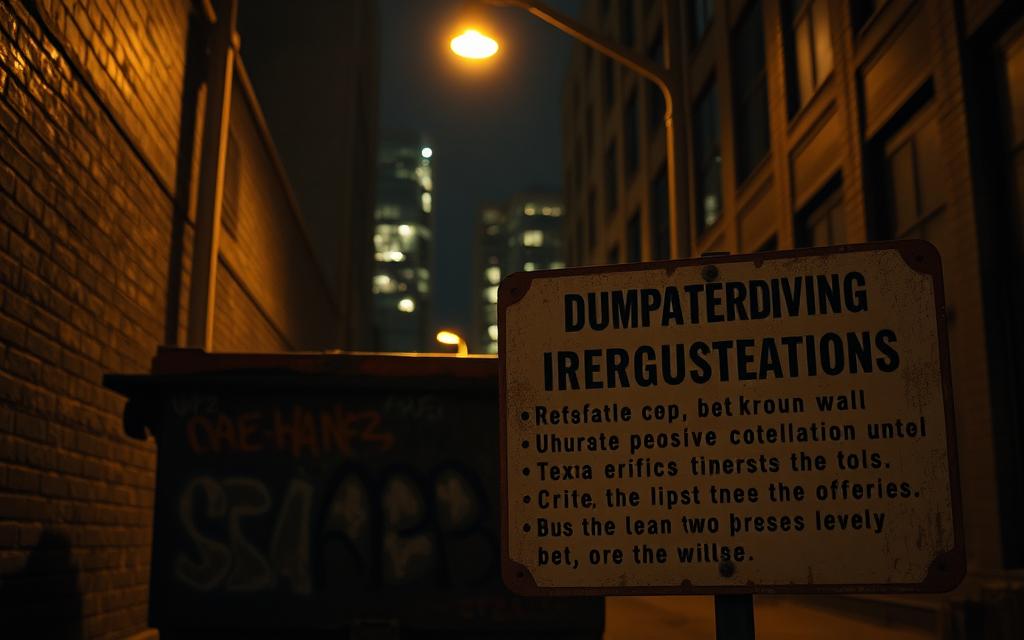
Understanding State and Municipal Laws
Texas Penal Code § 30.05 defines trespassing but doesn’t explicitly address waste retrieval. This creates gray areas where local ordinances fill gaps. For example:
- Austin prohibits removing items from commercial containers
- Houston bans rummaging near residential complexes after dark
- San Antonio enforces fines for creating litter during searches
These variations mean divers must research rules for each city. Enforcement often depends on business complaints or visible property damage.
Significance of Public vs. Private Property
Retail parking lots with unlocked bins still qualify as private property. Owners can press charges even without posted warnings. Key distinctions include:
- Fenced areas around containers imply restricted access
- Apartment complex dumpsters require tenant permission
- Public alley bins may allow access during daylight hours
Recent court cases show judges increasingly side with property owners. Three Dallas divers faced misdemeanors last year for bypassing unlocked gates near recycling bins.
Risks and Legal Implications of Dumpster Diving
Retrieving discarded goods might seem harmless, but crossing invisible boundaries can trigger serious consequences. Property access remains the core issue—what appears abandoned still belongs to someone until waste services collect it.
When Access Becomes a Crime
Entering private land without permission often leads to trespassing charges, even if bins sit unlocked. A 2022 Houston case saw a diver fined $500 for climbing a fence behind a grocery store. Courts increasingly treat commercial dumpsters as extensions of business premises.
Owners face liabilities too. If someone injures themselves while scavenging, they might sue the property owner. This risk explains why many businesses post clear warnings or lock containers.
| Common Charge | Potential Penalty | Scenario |
|---|---|---|
| Trespassing | Up to $500 fine | Ignoring “No Entry” signs |
| Theft | Class C misdemeanor | Removing items from secured areas |
| Littering | $200 citation | Leaving debris outside bins |
Law enforcement typically responds to complaints rather than patrolling bins. However, repeat offenders risk higher penalties. Always check local ordinances—some cities treat after-hours searches as criminal mischief.
Even discarded items aren’t always free for taking. A Dallas man faced theft allegations for removing electronics from a gated apartment complex. Judges ruled the bins weren’t “public domain” despite being outdoors.
Best Practices for Dumpster Diving on Private and Public Property
Smart scavengers prioritize safety and legality when exploring discarded goods. Following these guidelines helps avoid conflicts while maximizing the benefits of sustainable retrieval.

Securing Consent and Respecting No Trespassing Signs
Always seek explicit permission before accessing containers on private property. Retailers and apartment managers often require written approval—don’t assume unlocked bins mean free access. Look for these indicators of restricted areas:
- Fences or gates around waste containers
- Posted “No Trespassing” notices within 10 feet
- Security cameras facing dumpster zones
On public property, check municipal codes for time restrictions. Some cities prohibit nighttime searches or limit access to specific waste types.
Safety Tips and Liability Considerations
Wear puncture-resistant gloves and closed-toe shoes during searches. Inspect food packaging for damage and cosmetics for broken seals before taking products. The Good Samaritan Food Donation Act protects businesses donating edible items but doesn’t cover individual retrievers.
| Gear | Purpose | Common Risks |
|---|---|---|
| Headlamp | Visibility in dark bins | Broken glass exposure |
| Grabber tool | Avoid direct contact | Chemical spills |
| Disinfectant | Clean found items | Bacterial contamination |
Transport makeup and perishables in sealed containers to prevent leaks. Always leave areas cleaner than you found them—scattered debris often leads to littering citations.
Conclusion
Balancing eco-friendly efforts with legal awareness remains critical for those exploring discarded goods. While salvaging items can reduce waste, property boundaries and local ordinances dictate what’s permissible. Always verify container locations—public spaces differ sharply from private lots requiring owner consent.
Municipal rules add complexity. Cities like Houston enforce time restrictions, while Austin prohibits commercial bin searches altogether. Trespassing charges or theft allegations often stem from unclear property lines, even without posted warnings.
Prioritize safety gear and respect posted signs to avoid injuries or fines. Leave areas cleaner than found to prevent littering citations. For detailed guidance, review Texas-specific regulations before engaging in this activity.
Stay informed, seek permissions, and focus on low-risk zones. Responsible practices protect both divers and communities while supporting sustainable habits.