

Are you nervous about your upcoming Social Security disability hearing? Do you wonder if you’re truly prepared to face the administrative law judge who will decide your benefits?
A Social Security disability hearing is a big moment for those seeking disability benefits. If your first application and reconsideration were denied, this hearing is your chance to make a strong case.
Knowing what to expect at a disability hearing can really help you succeed. The process might seem scary, but with good preparation and knowing the right questions, you can feel confident.
Understanding the hearing process helps you make a strong case for needing disability benefits. Knowing a lot about your case is very important.
Table of Contents
Key Takeaways
- Disability hearings are a critical step in obtaining Social Security benefits
- Preparation is essential for a successful hearing outcome
- Administrative law judges carefully evaluate all presented evidence
- Medical documentation plays a critical role in your case
- Professional legal representation can significantly improve your chances
Understanding the Disability Hearing Process
Going through a Social Security disability appeal can be tough. The SSA hearing is a key part of the process. It’s where you can tell an Administrative Law Judge why you need disability benefits.
What is a Disability Hearing?
A disability hearing is a legal meeting. It’s where you explain why you should get Social Security disability benefits. You can share more evidence, talk about your health, and show how your disability stops you from working.
When is it Scheduled?
The SSA hearing happens after your first claim is denied. You’ll get a notice in 60-90 days. Important things to know include:
- Waiting times are 12-18 months
- Hearings are at local Offices of Disability Adjudication and Review
- Now, more hearings are online
Who Holds the Hearing?
An Administrative Law Judge leads the hearing. These judges know how to look at medical evidence and make fair decisions. They decide if you meet the Social Security rules for disability.
Getting ready well for your SSA hearing can really help. Knowing the process and showing clear evidence is key to winning your appeal.
Preparing for the Hearing
Going to a Social Security disability hearing can be tough. But, getting ready well can really help. It’s all about planning and having strong medical proof.
There are important steps to take. These steps can really change how your hearing goes.
Gathering Necessary Documents
It’s key to get all your papers ready for the hearing. Your medical records are the base of your claim. Make a big file with:
- Complete medical history
- Diagnostic test results
- Treatment records
- Physician statements
- Prescription documentation
Preparing Your Testimony
Talking about your disability can be very powerful. Practice telling how your disability affects your daily life. Give clear examples of your struggles.
Understanding the Role of Your Attorney
A good disability lawyer is very helpful. They organize your medical proof, guess what questions you might get, and plan how to show your case.
Having a lawyer can make you more likely to win. They make sure you have everything and show your case well.
The Hearing Environment
Going through the SSDI hearing process can seem scary. But knowing the setting helps you feel ready and confident. The hearing is different from a regular court.
The Social Security disability hearing is a big moment in your application. It’s not like a court trial. Instead, it’s more relaxed but just as important.
Inside the Hearing Room
The hearing room is small and professional. It’s made for easy talking. You might see:
- An in-person hearing room with administrative setup
- A virtual hearing through video
- A remote hearing by phone
Key Participants at a Disability Hearing
Knowing who will be there can make you feel less nervous. It helps you get ready.
| Participant | Role |
|---|---|
| Administrative Law Judge (ALJ) | Presides over the hearing and makes final decision |
| Vocational Expert | Provides insights about work capabilities |
| Medical Expert | Reviews medical evidence and offers professional assessment |
| Your Attorney | Represents your interests and guides testimony |
How you act during the hearing matters a lot. Be calm and professional. Be ready to talk about your health and work history.
Types of Evidence You Can Present
When you apply for Social Security Disability Insurance (SSDI), showing strong evidence is key. The right documents can really help your case. Knowing what evidence to gather and how to show it can make a big difference.
For a successful claim, you need good medical records for SSDI. The Social Security Administration wants to see clear proof of how your disability affects your work skills.
Medical Records and Documentation
Your medical records are the heart of your SSDI hearing. They should have:
- Comprehensive medical diagnoses
- Treatment history
- Physician statements
- Diagnostic test results
- Medication records
Personal Testimony
Your personal story is very important. SSDI tips say to talk about how your disability changes your daily life. Be honest, detailed, and focus on what you can’t do.
Witness Statements
Disability attorney tips also talk about the power of witness statements. Friends, family, or old bosses can share how your disability affects them too.
| Evidence Type | Importance | Recommended Action |
|---|---|---|
| Medical Records | High | Collect all the documents you can |
| Personal Testimony | Medium-High | Write a clear story of your challenges |
| Witness Statements | Medium | Get statements from people who know you |
Preparing your evidence well can really help your SSDI hearing. Work with doctors and think about getting a disability attorney. This way, your documents will be strong and clear.
What Happens During the Hearing
The Social Security Disability Insurance (SSDI) hearing might seem scary. But knowing what happens can make you feel better. It’s a key step to see if you get disability benefits.
At the hearing, many people will help figure out your claim. The judge will lead and ask lots of questions. They want to know about your health, work, and daily life.
The Opening Statement
Your hearing starts with an opening statement. It’s like a brief introduction to your case. Your lawyer will:
- Summarize your medical conditions
- Explain how your disability stops you from working
- Point out important medical evidence for your claim
Questioning by the Judge
The judge will ask lots of questions to understand your disability. They might ask about:
- Specific medical symptoms
- Treatment history
- How it affects your daily life
- Any past work experiences
Questioning by the Attorney
Your lawyer will also get a chance to add more evidence. They will make sure the judge has all the facts. They help make sure your case is fully understood.
Tip: Always answer truthfully and clearly during the hearing.
The Role of the Administrative Law Judge (ALJ)
The Administrative Law Judge is very important in the SSDI hearing process. They are independent and make fair decisions for the Social Security Administration. They check if someone is really disabled.
An ALJ has a lot of knowledge about disabilities. They look at all the evidence carefully. This helps them understand each person’s situation well.
How ALJs Evaluate Evidence
When making a decision, ALJs look at several important things:
- Medical records and treatment plans
- What doctors say
- What the person applying says
- What kind of work they can do
- How well they can do things
The ALJ Decision Making Process
The ALJ follows rules to decide if someone gets disability benefits. They carefully look at all the evidence. They want to see if someone can’t work because of their health.
They check if the health problem is serious enough. They see how it affects work and if there are other jobs they could do.
Common Questions You Might Encounter
Going to a Social Security disability court hearing can be tough. It’s key to get ready for SSDI hearing questions. This is your chance to share about your health and work history.
How well you prepare can really help your case. Lawyers say to practice your answers and know what questions might come up.
Disability-Related Questions
At the disability court hearing, judges will ask lots of questions about your health. Be ready to talk about:
- Specific symptoms and how bad they are
- Medical treatments you’ve had
- How your disability affects your daily life
- Any work tasks you can’t do
Work History Inquiries
It’s important to be open about your work history. You might be asked about:
- Jobs you’ve had before
- Why you left your last job
- Any work you’ve tried to do after getting disabled
- Skills that could be useful in other jobs
| Question Type | Key Focus Areas | Recommended Approach |
|---|---|---|
| Medical Condition | Symptoms and Limitations | Be specific, honest, and detailed |
| Work Capacity | Current Ability to Work | Explain functional limitations |
| Treatment History | Medical Interventions | Provide complete medical records |
Remember, being consistent and honest is very important during your SSDI hearing. Get ready well and stay calm during the whole process.
Tips for Effective Testimony
Going to a Social Security Disability Insurance (SSDI) hearing can be tough. It’s key to share your story well to win your case. How you talk about your experience matters a lot to the judge.
Getting ready for your hearing means thinking about how to share your story. You should talk about how your disability really affects you.
Staying Calm and Composed
It’s important to stay calm during your SSDI hearing. Here are some tips to help you:
- Practice deep breathing before the hearing
- Get a good night’s sleep before your court appearance
- Arrive early to get used to the place
- Wear clothes that are comfy but look good
- Remember, the judge wants to get your story
Being Honest and Clear
Being honest is very important when you talk in court. The judge will listen closely to what you say. Always tell the truth and don’t make things up.
- Talk straight about what you can’t do because of your disability
- Give examples of how your condition affects your daily life
- Answer questions quickly and truthfully
- Don’t make your symptoms seem worse or better than they are
- Keep your stories the same
Good testimony needs preparation, honesty, and clear talking. Follow these tips to do well in your SSDI hearing.
The Importance of Legal Representation
Going through the Social Security Disability Insurance (SSDI) hearing process is tough. You can try to do it yourself, but getting a disability attorney makes a big difference.
Benefits of Professional Legal Support
An experienced disability attorney knows how to handle your SSDI hearing. They can make your chances of winning much higher.
- They gather all the medical evidence you need.
- They prepare your case in the best way possible.
- They know how to understand and use expert testimony.
- They are great at questioning the other side.
Selecting the Right Legal Representative
When picking a disability attorney, keep these tips in mind:
- Look for someone who specializes in Social Security Disability law.
- Choose someone with a lot of successful hearings under their belt.
- Make sure they communicate clearly and are open about everything.
- They shouldn’t ask for money upfront.
The right attorney can turn your disability claim into a win. They know all the legal stuff and make sure your case is well taken care of.
Types of Disabilities Considered
Understanding SSDI benefits means knowing what disabilities qualify. The Social Security Administration looks at many medical conditions to see if you qualify.
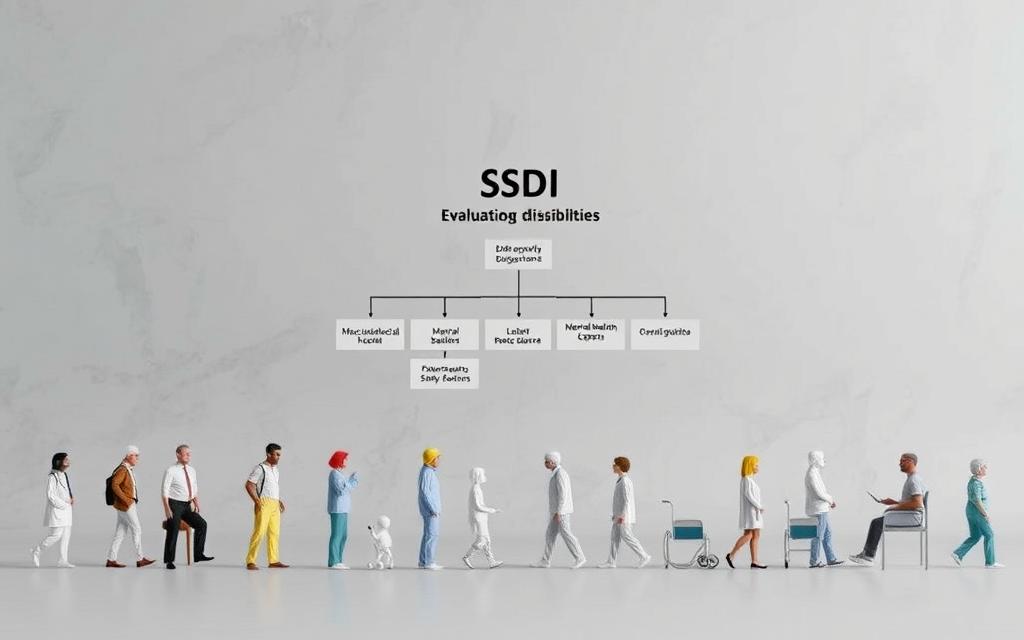
Medical evidence is key in the SSDI process. You need to show how your condition affects you. This helps in the evaluation.
Physical Disabilities
Physical disabilities include many health issues. These problems make it hard to work. Examples are:
- Musculoskeletal disorders
- Cardiovascular conditions
- Respiratory illnesses
- Neurological disorders
- Severe chronic pain conditions
Mental Health Conditions
Mental health issues are also important. The Social Security Administration checks mental problems like:
- Severe depression
- Bipolar disorder
- Anxiety disorders
- Post-traumatic stress disorder (PTSD)
- Schizophrenia
Other Qualifying Conditions
Some conditions are less common but can also get you SSDI benefits. These include:
- Rare genetic disorders
- Autoimmune diseases
- Severe chronic conditions
- Terminal illnesses
The Medical-Vocational Guidelines help figure out how these conditions affect work. You must show your condition stops you from working.
Understanding the Timeline After the Hearing
After your Social Security Disability Insurance (SSDI) hearing, waiting for results can be hard. The time it takes for an ALJ to make a decision is usually a few weeks to a few months. This can be very frustrating.
The timeline for a disability hearing has many important steps. These steps affect when you’ll get a decision:
- Administrative processing of hearing transcript
- Review of submitted medical evidence
- Comprehensive evaluation by the Administrative Law Judge
- Preparation of the official written decision
How Long Before You Receive a Decision?
Usually, it takes 2-3 months after the hearing to get a decision. Things that might make it take longer include:
- Complex medical documentation
- Need for additional expert medical reviews
- Backlog of cases in the Social Security Administration
Next Steps After the Decision
When you get your SSDI hearing results, you’ll need to act fast. Getting ready is important for this part of your disability claim.
If you’re approved, you’ll learn about your benefits and when they start. If you’re denied, you can appeal within a certain time.
Common Outcomes of a Disability Hearing
Going through SSDI hearing results can be tough. The disability hearing is a key part of your SSDI claim. Knowing what might happen helps you get ready for what’s next.

The SSDI hearing approval rate changes with each case. You might face three main results during your hearing:
Approval of Benefits
If the ALJ says you’re disabled, you win. This means:
- You get disability benefits right away
- You might get money for past benefits
- You keep getting monthly disability checks
Denial of Benefits
Getting denied doesn’t mean you’re out of luck. You have a few choices after a bad decision:
- Ask for a reconsideration in 60 days
- Appeal to the Appeals Council
- Take it to federal court
Request for Further Information
At times, judges need more info to decide. This doesn’t mean you’re denied. They might ask for:
- More medical records
- Specialist opinions
- Details about your work
Knowing these possible results helps you deal with the disability appeal better.
Resources for Disability Applicants
Going through the Social Security Disability Insurance (SSDI) process can be tough. But, finding the right help can really help you out.
Getting good legal help is key when you’re applying for SSDI. Tips from disability attorneys can help you understand the process better. This can increase your chances of winning.
Finding Legal Assistance
Here are some tips for finding a good lawyer:
- Look for lawyers who know a lot about Social Security disability law.
- Check if they have won many SSDI appeals.
- Set up meetings to talk about your case.
- Make sure they know about your health issue.
Support Groups and Organizations
There are many groups and organizations that can help you:
- National Organization of Social Security Claimants’ Representatives (NOSSCR) – They offer legal help.
- Local groups in your area for disability support.
- Groups focused on your specific health issue.
- Online places to talk to others going through the same thing.
These groups can give you important tips, support, and advice. They can help you through the whole process.
Remember, you’re not alone. Lawyers and support groups can guide you through the Social Security disability system.
Frequently Asked Questions
Going to a Social Security Disability Insurance (SSDI) hearing can feel scary. Many people have questions about SSDI hearings. These questions can help you feel less worried and better prepared.
How Long Does the Hearing Typically Last?
SSDI hearings usually don’t last long. They can be as short as 30 minutes or up to 60 minutes. How long it takes depends on a few things:
- How complex your disability claim is
- How much medical info you have
- The questions the judge asks you
Can You Bring Support to the Hearing?
Thinking about who to bring to the hearing is part of getting ready. You can usually bring:
- Your lawyer or legal helper
- A family member or friend for support
- A doctor if you need one
Remember to check with your local Social Security office. Rules might be a bit different in your area.
Additional Hearing Preparation Tips
Here are some more tips for getting ready for your SSDI hearing:
- Get there 15 minutes early
- Wear something nice and simple
- Bring all your medical papers
- Be ready to talk about your health openly
Conclusion
Getting ready for a disability hearing can seem tough. But, with the right info and strategies, you can feel strong. It’s all about knowing the steps, collecting all your medical records, and telling your story well.
SSDI hearing tips say it’s key to have all your papers in order and speak clearly. Showing how your disability affects your daily life is very important. Also, having a lawyer can help a lot in the Social Security disability world.
Getting disability benefits takes time and effort. To win your SSDI hearing, you need to prepare well, know what the judges look for, and share your medical story. It might be hard, but many people get the help they need.
Dr. Bill LaTour and his team say getting help from a pro can make your case stronger. With good prep and a strong presentation, you can fight for your rights. Your hard work and detailed records can help you get the benefits you deserve.