

Did you know 90% of legal disputes don’t go to court? Arbitration and mediation are changing how we solve problems. They are quick and cheaper than going to court.
When disagreements happen, people and businesses often choose arbitration or mediation. Each has its own benefits. They help solve problems in a flexible and efficient way.
Knowing the difference between arbitration and mediation helps us make better choices. They are useful for many kinds of disputes, from business to family issues. These methods help find solutions that everyone can agree on.
Table of Contents
Key Takeaways
- Alternative dispute resolution methods provide faster and more cost-effective solutions than traditional litigation
- Arbitration and mediation offer distinct approaches to resolving legal conflicts
- Parties can choose between binding and non-binding dispute resolution techniques
- These methods preserve relationships better than adversarial court proceedings
- Legal professionals increasingly recommend ADR as a primary conflict resolution strategy
Understanding Arbitration
Legal arbitration is a way to solve disputes without going to court. It’s faster and more flexible than traditional court cases. This method helps parties settle their conflicts in a new way.
Definition of Arbitration
Arbitration uses neutral third-party experts to settle disputes. They listen to both sides and make final decisions. This method is quicker and more straightforward than court cases.
Types of Arbitration
- Binding Arbitration: Decisions are final and legally enforceable
- Non-Binding Arbitration: Parties can reject the arbitrator’s decision
- Voluntary Arbitration: Mutually agreed upon by involved parties
- Mandatory Arbitration: Required by contract or legal requirement
Typical Arbitration Process
| Stage | Description |
|---|---|
| Case Initiation | Dispute is submitted to arbitration |
| Arbitrator Selection | Neutral professional chosen by parties |
| Hearing | Evidence and arguments presented |
| Decision | Binding award issued by arbitrator |
Businesses often pick arbitration for its speed. It usually solves disputes quicker than court cases. Most cases end in months, not years.
Understanding Mediation
Dispute mediation is a smart way to avoid long legal fights. It lets people and groups solve problems together. They talk and understand each other better.
Definition of Mediation
Mediation is a way to solve disputes without going to court. A neutral person helps both sides find a solution they can agree on. It’s all about talking, negotiating, and solving problems together.
Role of the Mediator
The mediator is like a referee who helps everyone talk. They make sure the conversation stays calm and respectful. Their job is to:
- Make sure everyone feels safe
- Help everyone talk openly
- Find common interests
- Look for ways to solve the problem
Typical Mediation Process
The mediation process is structured but flexible. Here’s what usually happens:
| Stage | Description |
|---|---|
| Initial Consultation | Parties meet with mediator to discuss conflict and establish ground rules |
| Joint Session | All parties present their perspectives and concerns |
| Private Caucuses | Mediator meets separately with each party to explore possible solutions |
| Negotiation | Parties work together to develop a mutually acceptable agreement |
| Resolution | Final agreement is drafted and signed by participating parties |
Mediation works well, with about 80% of cases solved. It’s great for keeping relationships strong and saving money and stress from long legal battles.
Key Differences Between Arbitration and Mediation
Arbitration and mediation are legal ways to solve problems. They have their own ways of fixing issues. Each has its own good points and rules.
Decision-Making Authority
The biggest difference is who makes the decision. In arbitration, one person makes a final choice. This choice is like a court’s decision.
- Arbitration: Arbitrator decides the outcome
- Mediation: Parties control the resolution
- Litigation: Judge or jury determines the result
Formality of Proceedings
Arbitration and mediation are very different in how they work. Arbitration is like a court, with strict rules and evidence. Mediation is more relaxed and open.
| Characteristic | Arbitration | Mediation |
|---|---|---|
| Formality Level | High | Low |
| Evidence Process | Formal Discovery | Informal Discussion |
Enforceability of Outcomes
Arbitration decisions are legally strong, like a court’s. Mediation agreements might need extra steps to be legally strong.
- Arbitration: Immediate legal enforceability
- Mediation: Possible to enforce on your own
- Approximately 30% of cases are now conducted remotely
Knowing these differences helps pick the best way to solve a problem.
Advantages of Arbitration
Arbitration is a strong way to settle legal disputes in many fields. It’s a good choice instead of going to court. It has special benefits that make it stand out.
Binding Decisions with Finality
Arbitration gives you decisions that are legally binding. This is different from mediation, which doesn’t have a final say. You can count on:
- A clear outcome without long legal fights
- Decisions that are as strong as court judgments
- Less doubt in solving disputes
Rapid Conflict Resolution
Arbitration is fast. Court cases can take a long time, but arbitration is quicker. Arbitrators can solve disputes 40% faster. This means projects can keep moving and businesses can keep growing.
Specialized Arbitrator Expertise
Arbitrators with the right industry knowledge are a big plus. For complex cases, you can pick experts who know your field well. They make sure:
- They understand the technical parts well
- They make better decisions
- They find the best ways to solve problems
Arbitration is a top pick for fast, expert, and private dispute solving.
Advantages of Mediation
Mediation is a great way to solve legal problems. It’s better than going to court. It lets people find solutions together and saves money.
Control over the Outcome
Mediation lets people decide their own outcome. They can work together to find solutions. This is different from court, where you don’t have as much say.
Cost-Effectiveness
Mediation is cheaper than going to court. It saves money and time:
- It costs less than court
- It’s faster
- Legal costs are lower
- It saves on administrative costs
| Dispute Resolution Method | Average Cost | Average Duration |
|---|---|---|
| Mediation | $3,000 – $5,000 | 1-3 months |
| Litigation | $20,000 – $50,000 | 1-2 years |
Confidentiality
Mediation is private. Talks stay secret. This lets people share openly without fear.
About half of cases settle in mediation. Most settle in two months. Mediation is becoming more popular for solving legal issues.
When to Choose Arbitration
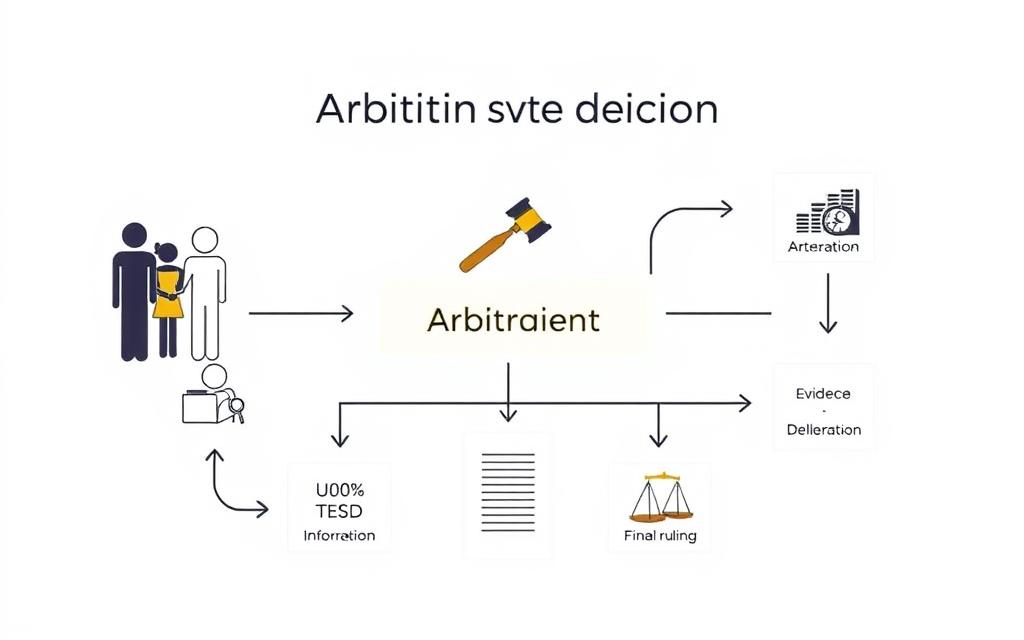
Legal disputes need smart choices. Arbitration is a strong option for solving big problems. Knowing when to use it can change the outcome of your case.
Suitable Scenarios for Arbitration
Arbitration is great for some legal issues. It offers flexibility and expert help that courts can’t always give.
- Complex commercial disputes needing special knowledge
- International conflicts with legal issues across borders
- Technical or industry-specific disagreements
- Situations needing quick, private solutions
Legal Contracts and Arbitration Clauses
Arbitration clauses are key in making legal decisions. They set arbitration as the main way to solve disputes before problems start.
- Preemptively define dispute resolution process
- Select neutral arbitrators with industry expertise
- Establish confidentiality parameters
- Minimize public litigation risks
For businesses and people wanting quick, expert solutions, arbitration is a good choice. Knowing its benefits and when to use it can help a lot.
When to Choose Mediation
Mediation is a special way to solve problems together. It’s different from fighting in court. Mediation aims to find solutions that everyone can agree on.
Choosing mediation depends on a few things. It’s best when keeping relationships strong is important.
Ideal Scenarios for Mediation
- Family Disputes: Like divorce, inheritance fights, or disagreements between parents
- Workplace issues that hurt personal relationships
- When business partners can’t talk anymore
- Disagreements in the neighborhood or community
Relationship Preservation Strategies
Mediation is great for keeping relationships strong. It helps people talk and work together. This way, everyone can:
- Talk openly and in a good way
- Understand each other better
- Find solutions that work for everyone
- Keep respect and dignity
| Mediation Benefit | Impact on Relationships |
|---|---|
| Voluntary Participation | Encourages mutual respect |
| Confidential Discussions | Builds trust between parties |
| Collaborative Problem-Solving | Reduces antagonism |
Many courts suggest starting with mediation. They see how well it works in solving problems peacefully. This way, it saves everyone from more stress and money.
Potential Disadvantages of Arbitration
Arbitration is a way to solve legal problems. But, it has big downsides that people should think about. It’s faster than going to court, but it’s not perfect.
Limited Appeal Rights
One big problem with arbitration is you can’t appeal much. Only about 30% of awards are challenged. This means you can’t often change a bad decision.
- Arbitration decisions are nearly always binding
- Very narrow grounds exist for appealing arbitration results
- Parties have less control over the final resolution
Potential Financial Challenges
Arbitration can be very costly. 55% of companies worry about the high costs. Fees can be 30% more than other ways to solve disputes.
- Arbitrator fees can be substantial
- Administrative costs add significant expense
- Complex cases may require extensive preparation
When thinking about arbitration, remember its downsides. But, it might be faster than court.
Potential Disadvantages of Mediation
Mediation is a way to solve legal disputes. It has many good points. But, it also has some challenges to think about before choosing it.
The Non-Binding Nature of Mediation
Mediation is known for its flexible way of solving problems. Unlike arbitration, mediated agreements are not automatically legally binding. This means people can talk about solutions without feeling forced to agree right away.
- Agreements require mutual consent
- Parties can walk away without resolution
- No guaranteed legal enforcement
Cooperation Challenges
Mediation works best when everyone cooperates. If people don’t want to work together, it can fail.
| Cooperation Level | Mediation Outcome Probability |
|---|---|
| High Cooperation | 85% Success Rate |
| Low Cooperation | 25% Success Rate |
About 30% of mediation cases get solved in the first meeting. The rest might need more talks or other ways to solve the problem.
- Power imbalances can impact effectiveness
- Requires voluntary participation
- Potential for unresolved conflicts
Knowing these possible downsides helps people decide if mediation is right for them.
Comparing Costs: Arbitration vs. Mediation
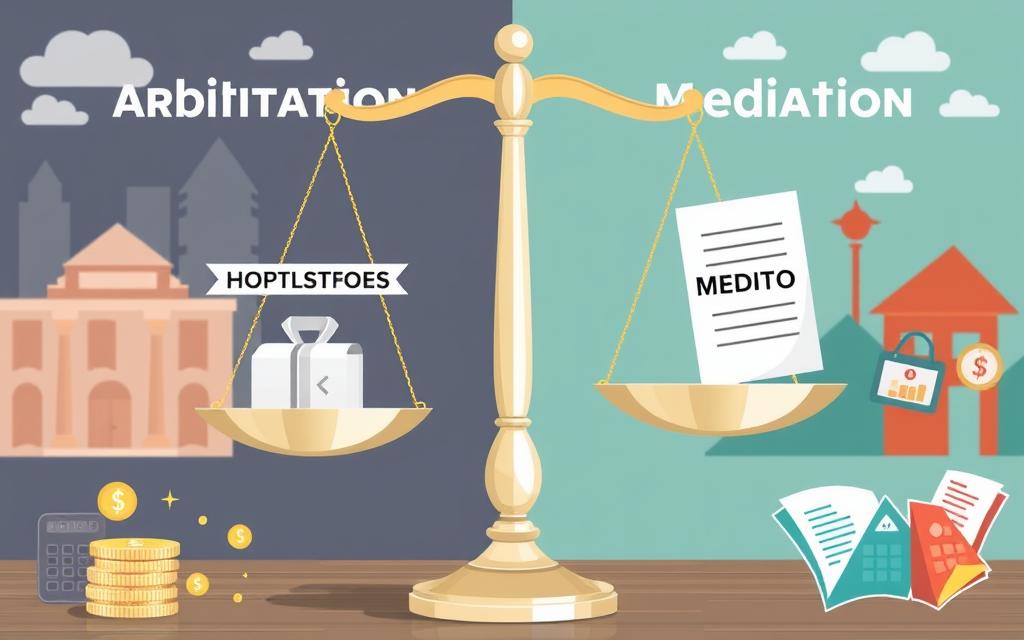
It’s important to know the costs of legal options. Arbitration and mediation have different costs. These costs can change how much it costs to solve a problem.
Initial Expenses Breakdown
The first costs of solving a dispute are different for arbitration and mediation. Arbitration costs more at the start because it’s more formal. Important costs include:
- Arbitrator fees
- Administrative charges
- Legal representation expenses
- Documentation preparation
Longer-Term Financial Implications
Looking at long-term costs is key when choosing how to solve a dispute. Mediation is often cheaper because it usually ends in one day. Studies show that:
- Mediation can cut costs by up to 70%
- Arbitration costs 30% to 50% less than court
- More than 75% of companies choose arbitration for quick results
More businesses are seeing the money-saving benefits of mediation and arbitration over long court fights. Mediation is voluntary and collaborative, while arbitration is binding. Each has its own cost benefits based on the dispute.
Cost Comparison Insights
Choosing the right way to settle a dispute means looking at costs carefully. Arbitration gives legally binding results, but mediation is often cheaper and more collaborative.
The Role of Lawyers in Arbitration and Mediation
Legal professionals are key in arbitration and mediation. They help solve disputes in new ways. Knowing their role helps clients choose the best path.
Lawyers use different strategies for arbitration and mediation. They adjust their skills for each case.
Lawyers in Arbitration Proceedings
In arbitration, lawyers act like courtroom advocates. Their main tasks are:
- Preparing strong case arguments
- Presenting important evidence
- Cross-examining witnesses
- Creating strategic legal stories
Arbitration needs lawyers to make strong cases to the arbitrator. About 60-80% of business disputes are solved this way. So, having a lawyer is very important.
Lawyers in Mediation Processes
Mediation is more about working together for lawyers. They act as:
- Strategic advisors
- Negotiation support experts
- Legal rights interpreters
- Conflict resolution facilitators
In mediation, lawyers help clients see all options. They explain legal points while keeping talks friendly. About 70-80% of disputes are solved in mediation.
Choosing between arbitration and mediation depends on the case. It also depends on the outcome and how the parties get along. Lawyers help guide through these complex paths.
Cultural Differences in Arbitration and Mediation
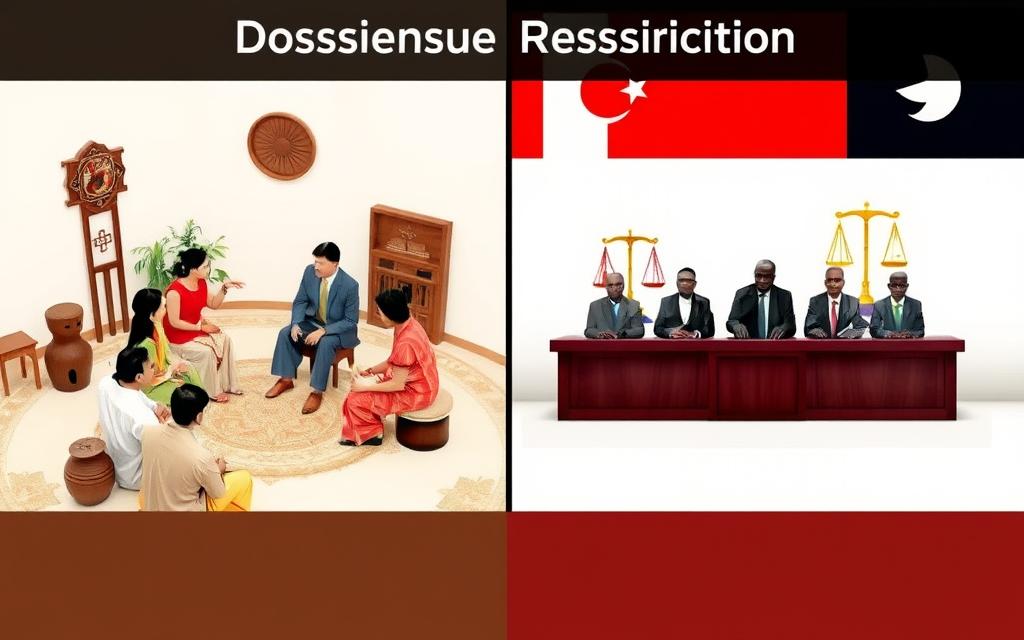
Alternative dispute resolution is shaped by cultural differences. These differences are not just about how people talk. They are deep and important for solving conflicts worldwide.
Global Perspectives on Dispute Resolution
Edward Hall’s Iceberg Culture Model shows us that most cultural influences are hidden. Only 10% are seen, and 90% are hidden. This affects how legal solutions are viewed and used globally.
- Communication styles vary dramatically across cultures
- Non-verbal cues play a critical role in dispute resolution
- Perceptions of fairness differ between cultural groups
Influence of Cultural Factors on Choices
Cultural backgrounds shape how we solve disputes. Some societies value harmony over individual rights. These differences affect whether we choose arbitration or mediation.
Training for arbitrators and mediators is key. They need to understand cultural differences. This helps them solve disputes more effectively, beyond just knowing the law.
| Cultural Aspect | Arbitration Impact | Mediation Impact |
|---|---|---|
| Communication Style | Formal interpretation | Collaborative approach |
| Power Dynamics | Hierarchical structure | Equal participation |
| Conflict Resolution | Binding decisions | Mutual agreement |
Understanding these cultural details helps legal experts create better conflict solutions. This is true for different places around the world.
Regulations Governing Arbitration and Mediation
Understanding arbitration rules and mediation services is key. The United States has clear laws for these options.
The rules for arbitration and mediation are complex. They involve many levels of government:
- Federal regulations set basic standards
- State laws add more specific rules
- Industry standards also play a role
Federal Regulations on Arbitration
The Federal Arbitration Act is the main law for arbitration. It makes sure arbitration agreements are followed everywhere.
| Regulatory Aspect | Key Features |
|---|---|
| Enforceability | Courts can dismiss lawsuits with valid arbitration clauses |
| Decision Impact | Arbitrator’s decisions are final and legally binding |
| Procedural Guidelines | Standardized process for dispute resolution |
State-Level Arbitration Regulations
State laws add more details to arbitration rules. Each place has its own rules that work with federal laws.
Mediation Service Regulations
Mediation has its own set of rules. Many states have laws for mediation. These laws focus on keeping things private and making sure everyone agrees.
Knowing these rules helps people choose the best way to solve disputes. It makes sure everyone knows how to handle conflicts.
Future Trends in Arbitration and Mediation
The world of solving legal problems is changing fast. New tech is making it easier to find peaceful solutions. This is making alternative dispute resolution (ADR) more popular.
Technology’s Role in Dispute Resolution
Online tools are changing how we solve conflicts. Online arbitration and mediation make it easier and faster to find solutions.
- Virtual hearing platforms increase global participation
- AI-powered mediation tools enhance decision-making processes
- Blockchain technology enables transparent dispute tracking
The Growing Popularity of ADR Methods
More people want to solve problems without going to court. Here are some interesting facts:
- 50% rise in virtual mediations with remote work
- AI could make ADR 40% more efficient
- Using ADR could cut legal costs by 50%
New tech is not just changing how we solve disputes. It’s changing how we think about legal problems. The future of solving disputes will be fast, easy, and fair for everyone.
Case Studies: Successful Arbitration
Legal arbitration is a strong way to solve problems in many fields. It’s faster and more private than going to court. This makes it a good choice for businesses.
High-Profile Arbitration Success Stories
Many big cases have shown how well arbitration works. It’s becoming more popular for solving tough business issues.
- Technology sector disputes resolved within months
- International trade conflict settlements
- Employment contract disagreements
Industries Utilizing Arbitration
Many areas use arbitration to solve problems. It’s quick and works well for different types of issues.
| Industry | Arbitration Frequency | Primary Dispute Types |
|---|---|---|
| Construction | 65% | Contract disagreements |
| International Trade | 58% | Cross-border conflicts |
| Technology | 47% | Intellectual property disputes |
| Employment | 52% | Workplace conflict resolution |
About 75% of companies use arbitration for international issues. It’s quicker and cheaper than court.
Arbitration is private, fast, and lets you pick the right person to decide. It can make solving problems much quicker.
Case Studies: Successful Mediation
Mediation is a strong way to solve problems in many fields. It works well in 70-80% of cases before they go to court. The merger of Walt Disney and Pixar in 2006 is a great example of how it can help big companies.
High-Profile Mediation Cases
Apple and Samsung used mediation to solve their patent fights in 2018. They saved a lot of money by not going to court. More tech companies are choosing mediation because it’s cheaper and works well.
Industries Utilizing Mediation
Mediation is used a lot in healthcare, jobs, and business. Stanford University’s hospital uses it to solve patient problems, cutting down lawsuits by 60%. It’s good because it keeps relationships strong and is used by over 60% of companies.