
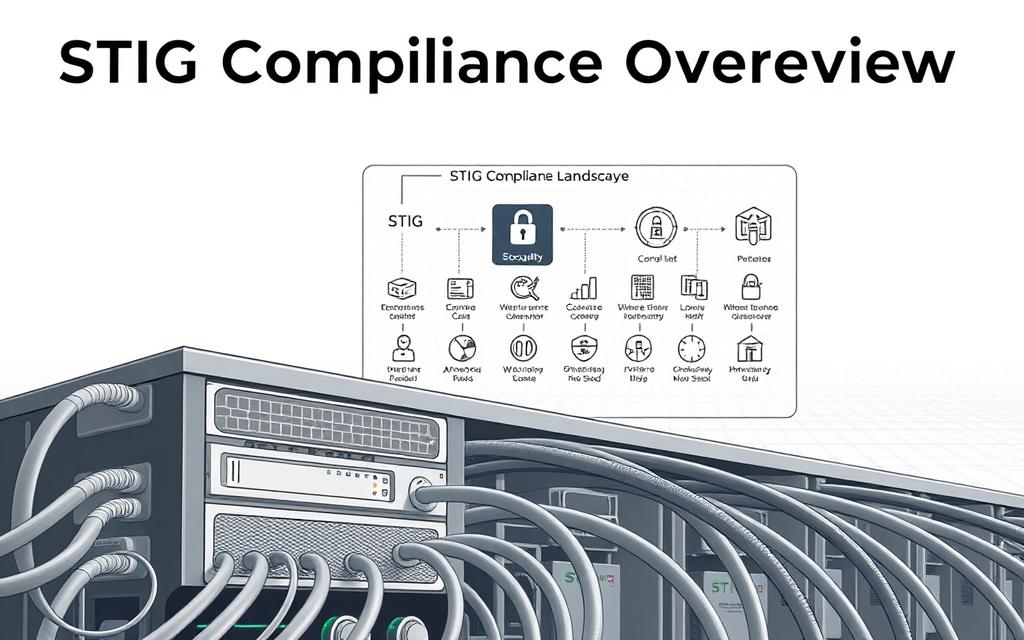
Did you know 60% of data breaches could be stopped with better security? STIG compliance is a key part of keeping systems safe. It gives organizations a strong way to protect their digital world.
STIG compliance is a detailed plan for making systems more secure. It was made by the Defense Information Systems Agency (DISA). It gives clear steps for making operating systems, network devices, and software safe from cyber threats.
Understanding STIG compliance is more than just following rules. It’s a set of rules that help organizations fight off cyber threats. By using STIG, businesses can make their systems safer and keep important information safe.
Table of Contents
Key Takeaways
- STIG compliance provides detailed security standards
- Helps organizations lower cybersecurity risks
- Created for strong system protection
- Works on many technology platforms
- Essential for companies with sensitive data
Understanding STIG Compliance
In the world of cybersecurity, STIG IT Compliance is key. It helps protect our digital world. Security Technical Implementation Guides (STIGs) are a detailed way to make systems safer.
The Department of Defense STIG helps secure computer systems and networks. It gives a clear plan to find and fix security problems in different tech areas.
Definition of STIG
A Security Technical Implementation Guide (STIG) is a set of rules for better system security. It includes:
- Specific configuration requirements
- Security control recommendations
- Detailed vulnerability assessment protocols
- Step-by-step implementation instructions
Importance of STIG Compliance
System Hardening STIGs are vital in today’s cybersecurity. They help organizations:
- Standardize security settings
- Lessen attack risks
- Set up the same security rules
- Lower system risks
Following STIG compliance is not just a suggestion—it’s a must for keeping digital assets safe from cyber threats.
The Origins of STIG
The Defense Information Systems Agency (DISA) is key in making cybersecurity rules for national defense. Knowing where STIG Guidelines come from shows how they keep government systems safe.
DISA became a big player in making security plans to fight new digital dangers. They saw the need for the same security rules for all tech in the Department of Defense.
Development of Security Technical Implementation Guides
Creating DISA STIG Guidelines needed careful thought:
- Spotting big IT system weaknesses
- Offering detailed security setup tips
- Setting the same security rules for all military networks
- Keeping up with fast-changing cyber threats
Historical Context of Cybersecurity Standards
As digital dangers got smarter, DISA knew they had to act fast. The STIG Guidelines are a way to stop security problems before they start.
DISA’s work on strong cybersecurity rules has changed how government systems are kept safe. They give detailed guides to help protect against cyber attacks.
Key Components of STIG
Security Technical Implementation Guides (STIGs) are key for keeping digital stuff safe. They give a clear plan to make computer systems, networks, and apps secure.
STIGs show how to find and fix security problems with clear steps. They help groups make strong cybersecurity rules.
Security Configuration Guides
The heart of STIG is making detailed security guides for different tech setups. These guides include:
- How to find and fix security holes
- Easy steps to fix problems
- Good security tips
- How to make systems strong
Vulnerability Assessment Process
To understand STIG, you need a clear plan for checking for security issues. The steps are:
- First, scan the system
- Then, find security weak spots
- Next, decide which to fix first
- After that, follow the fix steps
| STIG Component | Key Function | Implementation Difficulty |
|---|---|---|
| Configuration Guides | Give specific security settings | Medium |
| Vulnerability Checklist | Finds system risks | High |
| Remediation Instructions | Offers clear fix steps | Low |
Using these STIG parts, groups can really boost their online safety. And protect important digital stuff.
Benefits of STIG Compliance
Today, companies face big cybersecurity challenges. They need strong protection plans. STIG compliance helps make digital defenses stronger and cuts down on risks.
Using STIG validation steps helps companies in many ways. These security rules give full protection to network systems.
Enhanced Security Posture
STIG compliance makes a company’s network safer by:
- Lowering attack chances
- Finding system weaknesses fast
- Setting up the same security rules everywhere
- Building strong defense systems
Improved Risk Management
STIG validation steps help companies manage risks better. By following these rules, businesses can:
- Check their security level
- Make plans to fix weaknesses
- Lessen chances of being hacked
- Keep watching for security issues
Cybersecurity experts say STIG compliance is key for strong digital safety and protecting important company data.
STIG Implementation Process
Getting STIG Compliance right means securing IT systems well. Companies must follow a detailed plan to get good cybersecurity. They need to plan and act carefully to meet strict security standards.
For IT System STIG Overview to work, many important steps must be done right.
Assessment of Current Systems
The first step is to check all IT systems well. Companies must look at their IT setup closely to find weak spots.
- Do deep security checks
- Find security holes in systems
- Make a list of all IT stuff
- Write down what security they have now
Remediation Steps
Once they find weak spots, companies need a plan to fix them.
- Sort out which weaknesses are most urgent
- Make a plan to fix security issues
- Make the needed security changes
- Check that the security changes work
| Implementation Stage | Key Actions | Expected Outcome |
|---|---|---|
| Initial Assessment | Comprehensive system review | Detailed vulnerability mapping |
| Remediation Planning | Develop targeted security improvements | Structured risk mitigation strategy |
| Implementation | Execute security configuration changes | Enhanced system security posture |
Getting STIG compliance right needs consistent commitment and a careful plan for cybersecurity. Companies should see this as a never-ending journey to keep systems safe and secure.
Tools and Resources for STIG Compliance

Managing Government Security Compliance needs special tools. These tools make following security rules easier. They help organizations handle STIG Control Categories well.
Today, cybersecurity experts have cool automated tools. These tools make following STIG rules fast and easy. They turn slow, hard work into quick, simple steps.
Automated STIG Tools: Transforming Compliance
Advanced automated tools bring big benefits for security rules:
- They scan systems fast for problems
- Check system settings automatically
- Keep track of compliance in real time
- Make detailed reports
Tools like SteelCloud ConfigOS make compliance much faster. What used to take weeks now takes just hours.
Best Practices for Implementation
To manage STIG Control Categories well, follow these steps:
- Do a full check of systems first
- Pick strong automated tools
- Make good training programs
- Keep watching systems for changes
It’s important to fit these tools into your current security setup. This way, you can keep up with security rules without stopping your work.
STIG vs. Other Security Frameworks
Understanding cybersecurity standards is key. The Defense Information Systems Agency (DISA) Security Technical Implementation Guidelines (STIG) are important. They help protect digital information in a special way.
Looking at NIST vs STIG, we see big differences. NIST gives broad guidelines. STIG gives detailed security steps.
Comparing STIG and NIST Frameworks
Here are some main differences:
- Scope of Implementation: NIST 800-53 outlines general security controls
- Specificity: STIG provides precise technical implementation guidelines
- Target Environment: STIG focuses on federal and defense systems
STIG in Relation to Other Compliance Standards
STIG works well with many security standards. Unlike PCI DSS, which is for payment systems, STIG fits many tech areas.
Using STIG helps organizations make strong security plans. These plans work beyond just following rules.
STIG Compliance Challenges
Getting through Military System STIG compliance is tough. Security experts face many challenges. These tests their skills and planning.
Using STIG standards needs a big plan. Companies hit many big hurdles during this process:
- Changing system settings a lot
- Changing apps might break them
- It takes a lot of work to set it up
- Dealing with different systems is hard
Identifying Core Compliance Challenges
The risk management framework needs careful work. Security teams find it hard to:
- Keep security and work running smoothly
- Keep up with lots of documents and audits
- Fix old system problems
- Stay compliant in changing times
Strategic Approaches to Overcoming Obstacles
Getting past STIG compliance needs smart plans. Companies can do better by:
- Using automated scanning tools
- Teaching people well
- Planning in steps
- Having a team for compliance
Knowing these challenges and using smart fixes can make STIG compliance easier. It can even be a big win for security.
STIG Compliance for Businesses
For businesses working with the federal government, STIG compliance is key. This is true for those in defense and tech. It’s all about keeping information safe and systems secure.
Remember, STIG compliance isn’t a one-size-fits-all deal. Each industry needs its own set of rules to stay safe and keep things running smoothly.
Industry-Specific STIG Implementation
Here’s how to tackle STIG compliance:
- Do a full security check
- Make a plan just for you
- Use tools to check for compliance
- Teach IT folks about security rules
Successful Compliance Case Studies
Let’s look at some examples of STIG success:
| Industry | Compliance Strategy | Security Outcome |
|---|---|---|
| Defense Contractors | Comprehensive STIG assessment | 98% vulnerability reduction |
| Healthcare Technology | Automated compliance monitoring | Continuous security improvement |
| Financial Services | Customized hardening guidelines | Enhanced system resilience |
Getting STIG compliance right takes dedication to keeping info safe. By facing unique challenges and using the right tools, businesses can guard their digital world well.
Automated Compliance Solutions
The world of System Security STIGs is changing fast with new tech. Companies are finding smart ways to make their STIG Configuration Guide work better. This is thanks to advanced compliance solutions.

Tools for automated compliance have changed how we harden systems. They make security setup faster and more accurate.
Overview of Automation Tools
Today’s STIG compliance platforms offer strong security management tools. They usually have:
- Automated vulnerability scanning
- Real-time configuration assessment
- Continuous compliance monitoring
- Rapid remediation recommendations
Benefits of Automation
Using automated compliance tools brings big wins in security:
| Benefit | Impact |
|---|---|
| Reduced Human Error | Less chance of mistakes |
| Efficiency Gains | Up to 90% less work needed |
| Consistent Security | Same setup for all systems |
Now, smart automation helps companies tackle System Security STIGs better. They get strong protection with less human help.
Continuous Monitoring for STIG Compliance
Keeping your systems safe needs more than just one check. Continuous monitoring is key to keeping up with security threats. It helps organizations stay safe from new dangers.
Importance of Ongoing Compliance
The digital world changes fast, and old security methods don’t work anymore. The Defense Information Systems Agency (DISA) updates Security Technical Implementation Guides (STIGs) every three months. This keeps systems secure and up-to-date.
- Quarterly STIG updates address emerging cyber threats
- Proactive monitoring prevents possible security breaches
- Real-time tracking of system configurations
Best Practices for Monitoring
To monitor systems well, follow some important steps. Use automated tools to make it easier and keep systems safe.
- Use automated scanning tools
- Set regular check times
- Make detailed reports
- Train IT teams on new security rules
Continuous monitoring makes STIG compliance a constant part of security. It keeps important systems safe from new threats.
Future of STIG Compliance

The world of cybersecurity is changing fast. This brings new challenges and chances for companies. The Department of Defense (DoD) is updating its ways to fight digital threats.
Zero Trust architecture is a big change in DoD rules. It changes how we protect our online world. It does away with old ways of keeping networks safe.
Emerging Security Threats
Cyber threats are getting more complex and targeted. Companies need to get ready for tough challenges like:
- Advanced persistent threats (APTs)
- Artificial intelligence-powered cyber attacks
- Quantum computing vulnerabilities
- Cloud infrastructure exploitation
Anticipated STIG Standard Updates
STIG rules will likely change a lot to keep up with new tech. Important areas to watch include:
- Enhanced cloud security protocols
- More detailed ways to check for vulnerabilities
- Using machine learning to spot threats
- Guidelines for using zero trust more widely
Companies serious about keeping their online world safe must stay quick and ready. Keeping STIG rules up to date is key to facing new threats.
Conclusion: Achieving STIG Compliance
Keeping systems safe is very important. STIG Compliance helps a lot. It gives a clear plan to keep digital stuff safe.
Keeping systems safe is not just one thing. It’s something you do all the time. DISA gives rules to help find and fix problems.
Importance of Commitment
Following STIG rules needs a big commitment. IT teams must always be ready to update and train. This keeps everything safe and strong.
Final Thoughts on System Security
STIG compliance is key in a world full of cyber threats. Companies that follow these rules get much safer. They keep their digital treasures safe and work well in a tough tech world.