
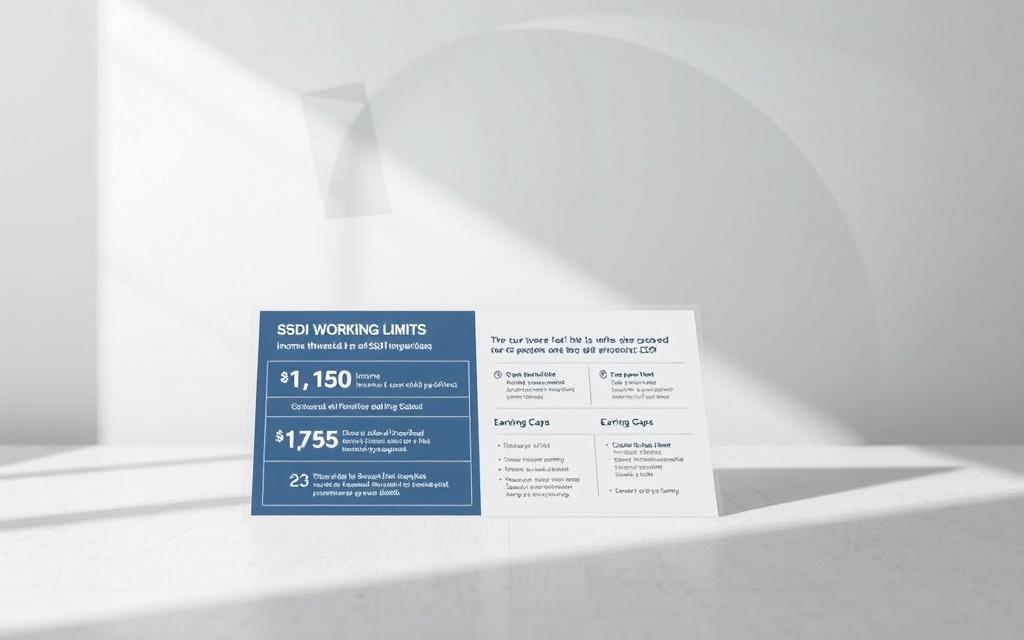
Are you wondering if working could hurt your Social Security Disability Insurance (SSDI) benefits? Many think working means losing their support. But, the Social Security Administration has rules that let you earn money without losing your benefits.
Knowing about SSDI Work Limits is key for those wanting to work and manage health issues. The Social Security Administration says disability doesn’t mean you can’t work. With special work programs, you can work and keep your benefits.
This guide will explain the rules, earnings limits, and safety nets. They help SSDI recipients work while keeping their benefits.
Table of Contents
Key Takeaways
- SSDI recipients can work within specific earning limits
- Social Security offers work incentive programs
- Careful income reporting is essential to maintain benefits
- Trial work periods allow gradual workforce reintegration
- Professional guidance can help navigate SSDI work rules
Understanding SSDI
Social Security Disability Insurance (SSDI) is a big help for people who can’t work because of serious health issues. It’s a federal program that gives financial support to workers with big health problems.
The Social Security Administration manages SSDI Benefits well. They make sure the money goes to those who really need it. Knowing the Disability Income Guidelines helps people apply better.
What Exactly is SSDI?
SSDI is a special insurance for workers who can’t keep a job because of long-term health problems. It helps people who have worked and paid into Social Security before.
Who Can Qualify for SSDI?
To get SSDI, you must meet certain rules. You need to show:
- A medical condition that will last at least 12 months
- You can’t do substantial work
- You have enough work credits from before
Key Benefits of SSDI
SSDI has many good points for those who qualify:
| Benefit Type | Description |
|---|---|
| Monthly Financial Support | Regular money payments based on your work history |
| Medicare Eligibility | Healthcare coverage after a 24-month wait |
| Family Benefits | More support for your family, like kids |
Getting SSDI can be tricky, but knowing the basics helps you make smart choices about your disability support.
Working While on SSDI: Overview
Working while getting Social Security Disability Insurance (SSDI) can be tough. The Social Security Administration knows this. They have special work incentives for people with disabilities who want to work again.
You don’t lose your SSDI benefits just because you work. There are many ways for SSDI recipients to find jobs without losing money right away.
SSDI Work Incentives Explained
The SSDI and work world has important protections for people with disabilities. These incentives help people with disabilities to work without worrying about losing support.
- Maintain financial stability during employment transition
- Protect ongoing medical benefits
- Provide gradual return to workforce options
Trial Work Period: What You Need to Know
The Trial Work Period is a key part of SSDI work plans. It lets recipients try working without losing their benefits right away.
| Trial Work Period Details | Key Information |
|---|---|
| Duration | 9 consecutive or non-consecutive months |
| Earnings Threshold | Monthly earnings over $970 (2023 rate) |
| Benefit Status | Full benefits continue during trial period |
Knowing about the Trial Work Period helps SSDI recipients to try working with less financial risk. It’s a safety net that lets people slowly get back to work while keeping important disability support.
Trial Work Period: Key Details
Going through the Social Security Disability Insurance (SSDI) system can be tough. It’s even harder when you think about going back to work. The Trial Work Period is a big help for SSDI people to try working without losing their benefits right away.
The Trial Work Period is a special chance for SSDI people to see if they can work. It lets them make money without losing their disability help right away.
Duration of the Trial Work Period
The Trial Work Period lasts for a certain time with some money rules:
- Lasts for 9 months within a rolling 60-month period
- Months do not need to be consecutive
- In 2024, a trial work month is triggered by earnings over $1,050
Reporting Requirements During the Period
It’s very important to report your work to SSA during the Trial Work Period. You must tell them about your income and job to avoid losing SSDI benefits.
| Reporting Requirement | Details |
|---|---|
| Earnings Reporting | Monthly income over $1,050 counts as a trial work month |
| Reporting Frequency | Report all work and earnings to Social Security Administration |
| Documentation | Provide pay stubs, work records, and income statements |
Key Tip: Keep detailed records of your work and earnings. This helps you talk smoothly with the Social Security Administration during your Trial Work Period.
Substantial Gainful Activity (SGA)
Understanding Social Security Disability Insurance (SSDI) is key. It’s about knowing Substantial Gainful Activity (SGA). This idea helps figure out if you can keep getting SSDI while working. The amount you can earn matters a lot for keeping your benefits.
What is Substantial Gainful Activity?
Substantial Gainful Activity means doing work that pays enough to stop your disability benefits. The Social Security Administration (SSA) watches how much you make. They make sure you get help if you have a disability.
SGA Earnings Limits for 2023
The SGA limits for 2023 are clear:
- Non-blind individuals: $1,470 per month
- Blind individuals: $2,460 per month
These limits change every year because of inflation and the economy. If you make more, you might lose some or all of your benefits.
Exemptions from SGA
Some cases can change how SGA works:
- Impairment-Related Work Expenses (IRWE): Some work costs related to your disability can be subtracted from your earnings
- Subsidized employment considerations
- Special work places for people with disabilities
Knowing these details helps you work without losing your disability benefits.
Temporary Reduction in Benefits
Working part-time while on SSDI can be tricky. It’s important to know how your earnings affect your benefits. The Social Security Administration has rules for this.
How Benefits Are Adjusted
After the Trial Work Period, earning money on SSDI has rules. The Social Security Administration watches your earnings each month. If you make too much, your benefits might change.
- Earnings above SGA can trigger benefit reduction
- Benefits may be temporarily suspended
- Extended Period of Eligibility provides protection
What to Expect When You Exceed SGA
If you make more than the SGA limit, the Social Security Administration will look at your case. This doesn’t mean you’ll lose benefits forever. You have choices during this time:
- Receive a formal notification about benefit status
- Potential temporary benefit suspension
- Opportunity to reinstate benefits if earnings decrease
The Extended Period of Eligibility gives you 36 months to get your benefits back. This helps if you’re trying part-time work.
Impairment-Related Work Expenses (IRWE)
Working On Disability can be tough, with SSDI Work Limits to keep up with. Impairment-Related Work Expenses (IRWE) are a big help for people with disabilities who want to work.
Understanding IRWE Basics
IRWE are costs that help people with disabilities work. They can lower the income counted by Social Security. This helps people keep their Disability And Job balance while getting SSDI benefits.
Common IRWE Deductions
- Medical devices and equipment
- Specialized transportation services
- Personal assistance services
- Prescription medications
- Wheelchair modifications
- Prosthetic devices
Claiming IRWE Deductions
To claim IRWE deductions, you must:
- Document all disability-related work expenses
- Prove expenses are necessary for employment
- Submit detailed records to Social Security Administration
- Ensure expenses are not reimbursed by other sources
Careful documentation is key to successfully claiming these important work-related expense deductions.
Protecting Your SSDI Benefits
Getting SSDI and working can be hard for people with disabilities. The Social Security Administration helps a lot. They give work incentives to keep SSDI recipients stable financially.
Key Work Incentives for SSDI Recipients
You can work and keep your important benefits. The SSA has ways to help:
- Trial Work Period lets you try working
- Extended Period of Eligibility keeps benefits safe
- Expedited reinstatement helps get benefits back if work fails
Strategies for Maintaining Benefits
To not lose benefits, track your earnings well. Know the important rules:
- Always tell the Social Security Administration about your income
- Make sure your earnings are under Substantial Gainful Activity limits
- Use work incentive programs like Ticket to Work
Knowing these rules helps SSDI recipients work without losing money. They can build their careers and keep their disability benefits.
Medicaid and SSDI
Getting health care can be hard for SSDI folks who want to work part-time. It’s key to know how SSDI and Medicaid work together. This helps keep your health care while you look for jobs.

Disability Income Guidelines help with health care for people with disabilities. SSDI and Medicaid’s relationship is complex. It changes based on your situation and the state you live in.
How Working Impacts Medicaid Eligibility
Working part-time can change your Medicaid. States handle health care for working disabled people differently:
- Some states have Medicaid Buy-In programs
- How much you make affects if you can keep Medicaid
- There are special rules to keep health care access
Medicaid for SSDI Recipients
Medicare often keeps going even when SSDI money stops. Here are some important details:
| Coverage Type | Duration | Key Details |
|---|---|---|
| Medicare Extended Coverage | 93 months | Keeps going after trial work period |
| Medicaid Buy-In | Varies by state | Helps working people keep coverage |
| Income-Based Eligibility | Dependent on earnings | Benefits adjust based on income |
People should talk to their local Social Security or state Medicaid to learn about their options.
Reporting Income and Employment
It’s hard to deal with work rules while getting Social Security Disability Insurance (SSDI). Knowing how to report your income and job status is key. This helps keep your benefits and lets you work legally on SSDI.
If you get SSDI, the Social Security Administration (SSA) needs to know about your work. You must follow important steps to stay in good standing and keep your benefits.
Essential Reporting Requirements
- Report any changes in employment immediately
- Provide accurate details about your SSDI Monthly Income
- Notify SSA about work status changes within 10 days
How to Report Your Work
SSDI recipients can report their work in several ways:
- Online through the SSA website
- By phone at the local SSA office
- In-person at a Social Security office
- By mail using official SSA forms
Importance of Accurate Reporting
Not reporting work right can lead to big problems. This includes losing benefits or being accused of fraud. Being open is important to keep your SSDI benefits while working.
The SSA has programs to help disability recipients who want to work again. By following the rules, you can use these programs and keep your money safe.
Work Incentives: Ticket to Work Program
Getting a job while on Social Security Disability Insurance (SSDI) can be tough. The Ticket to Work Program helps a lot. It’s for those who want to work while getting SSDI.
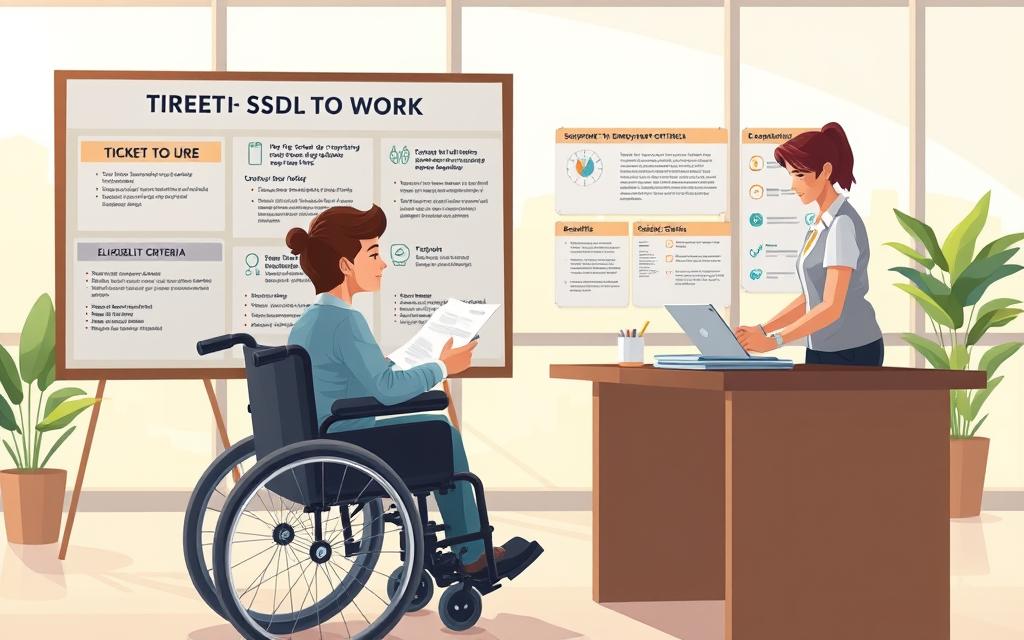
The Ticket to Work Program is free and optional. It helps SSDI recipients become more independent at work. It’s for people with disabilities who want to work.
Understanding the Ticket to Work Program
Here are some main points about the Ticket to Work Program:
- Free career counseling and job training
- Connection with Employment Networks
- State Vocational Rehabilitation agency support
- Protection from medical Continuing Disability Reviews
Program Benefits for SSDI Recipients
People in the Ticket to Work Program get big benefits:
| Benefit Category | Program Advantage |
|---|---|
| Career Development | Personalized job skill enhancement |
| Financial Security | Gradual transition to employment |
| Medical Protection | Continued benefits during work transition |
The Ticket to Work Program helps SSDI recipients find jobs. It’s a way to move from disability benefits to working.
By joining, people can learn new skills and get work experience. They might even stop needing SSDI benefits.
Returning to SSDI After Work
Working with SSDI and a job can be tough for people with disabilities. The Social Security Administration helps those who want to work without losing their SSDI benefits forever.
If you can’t keep working because of your disability, SSDI has a special help. It’s called Expedited Reinstatement. This lets you quickly start getting benefits again within a certain time.
Reapplying for SSDI Benefits
When you can’t work anymore, you have a few ways to get back to SSDI:
- You can ask to start benefits again within five years of stopping work
- Give medical proof that your disability is back
- Send a formal request to the Social Security Administration
Critical Considerations for Returning
Before you apply again, think about these things:
- Keep all your medical records
- Write down any changes in your health
- Know how it might affect your future benefits
- Check if you can keep your Medicare
The Expedited Reinstatement helps people who try to work. It makes sure they’re not punished forever. This way, SSDI helps people try jobs while keeping a safety net for those who can’t work.
Resources for SSDI Recipients
Finding help with SSDI Employment can be tough for people with disabilities. It’s key to find the right help for those wanting to work while on SSDI. This part will guide you to support groups and help programs.
Social Security Administration Support
The Social Security Administration has many tools to help SSDI recipients:
- Online Benefit Eligibility Screening Tool (BEST)
- My Social Security online account
- Local Social Security offices
- Detailed benefits publications
Non-Profit Organizations and Support Groups
Many groups help people with disabilities find jobs:
| Organization | Services Offered |
|---|---|
| Vocational Rehabilitation Services | Career counseling, job training, employment placement |
| Independent Living Centers | Personal support, skills development, community integration |
| Disability Rights Advocacy Groups | Legal support, policy guidance, employment resources |
These groups offer critical guidance for SSDI recipients. They help balance work and benefits. Each group has unique support for employment challenges.
Additional Support Channels
Recipients can get help through:
- Online support forums
- Disability-specific job networks
- Career coaching services
- Government workforce development programs
Knowing and using these resources can help SSDI recipients find jobs. They can keep their benefits while working.
Common Misconceptions About SSDI and Work
SSDI can be hard to understand, like when it comes to work. Many think wrong things about Can You Work While On SSDI. This stops them from looking into jobs.
Let’s clear up some common myths about Working While Disabled and SSDI And Part Time Work:
- Myth: Working automatically disqualifies you from SSDI benefits
Reality: The Social Security Administration has special work incentives. These let disabled people work without losing their benefits right away.
- Myth: Only full-time work is restricted
Actually, part-time work is okay for many SSDI people. They just need to follow certain rules and report their work.
- Myth: Returning to work means permanent benefit loss
The Ticket to Work program and trial work periods help. They let people try to work again safely.
Real-Life Success Stories
Many SSDI people have found a way to work and keep their benefits. They planned well and knew about the help available.
| Work Scenario | Benefit Status | Key Strategy |
|---|---|---|
| Part-time freelance writing | Benefits maintained | Stayed within SGA limits |
| Remote customer service | Partial benefits continued | Used work incentive programs |
| Consulting work | Gradual benefit reduction | Utilized trial work period |
Knowing these details helps SSDI people feel okay about looking for jobs. They won’t worry about losing their financial help.
Conclusion
Working on disability doesn’t mean your career is over. The Social Security Disability Insurance (SSDI) program helps you work while keeping your benefits. It’s important to know the SSDI work limits to balance work and health.
To earn money on SSDI, you need to know the rules and use work incentives. Programs like the Trial Work Period and Ticket to Work help you work without losing benefits. They help you grow professionally and be independent.
Planning and reporting your income correctly is key when working on SSDI. Use resources from the Social Security Administration and get help from disability support groups. This way, you can grow financially and personally while following SSDI rules.
SSDI is not a block to work. It’s a support system for people with disabilities to find meaningful jobs. By knowing the rules and incentives, you can find a job that fits your health and career goals.
Key Insights for Moving Forward
Look into your possibilities, stay up-to-date on SSDI rules, and keep growing professionally. Your disability is just one part of who you are.
Empowering Your Professional Journey
Every step towards work is a step towards more freedom. With the right information and support, SSDI recipients can balance work and health.